← Back to Mixed-media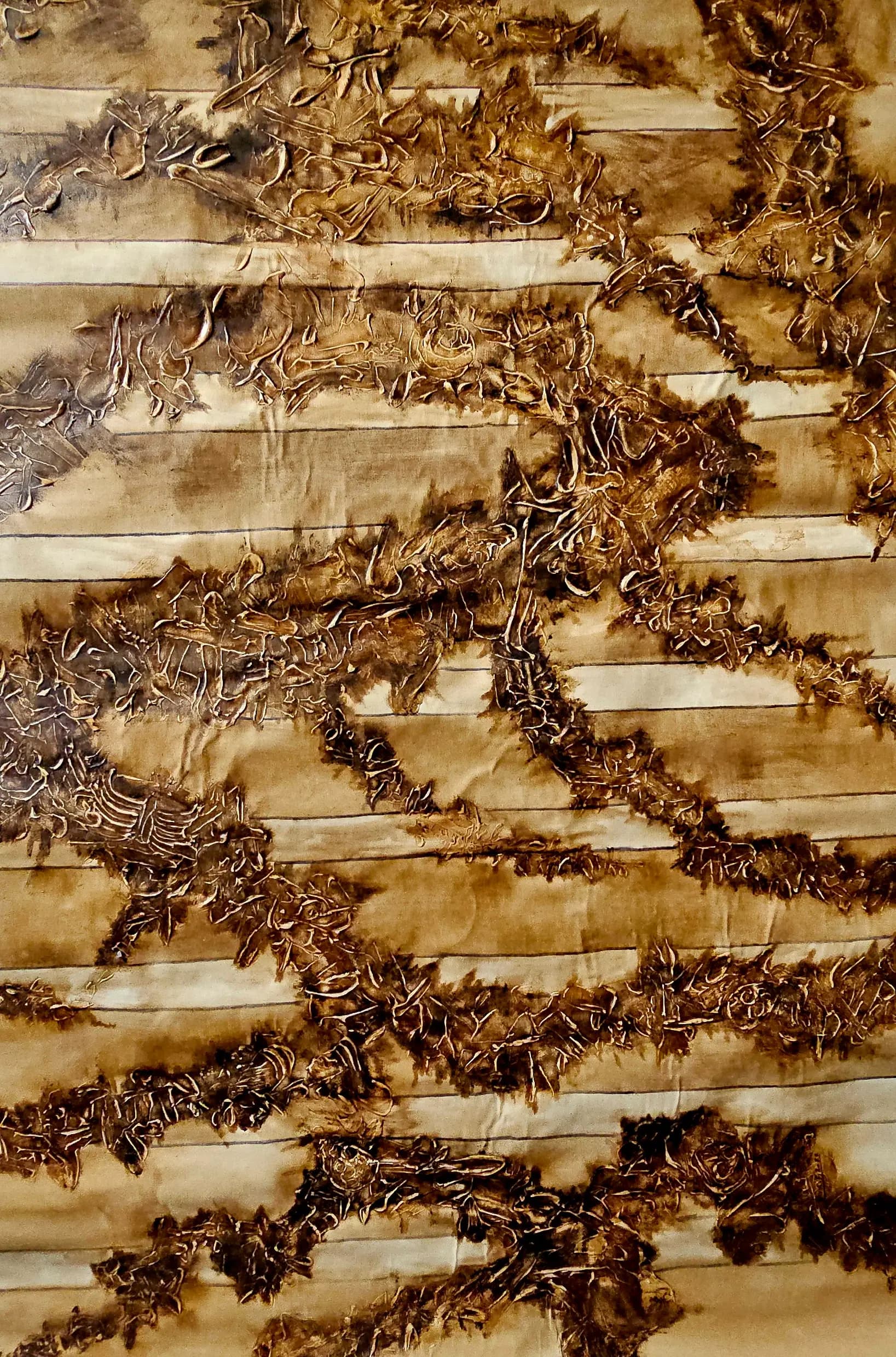
available
Commemoration fo the Victims of Jaghori-Kandahar
by Zia Forogh
MediumPure bitumen with material
Year2022
Dimensions150x99cm
Price$6,900
About this piece
“Commemoration of the Victims of Jaghori–Kandahar” was created using tar — a material whose darkness, heaviness, and solidity symbolize death, silence, and historical violence. The work honors the thousands of Hazara who were forced out of vehicles along the Jaghori–Kandahar route and brutally beheaded in the winding valleys. More than two thousand people lost their lives there, and to this day, the bones of the victims remain scattered throughout these ravines. The wounded lines and scarred textures on the canvas evoke the dark, blood-soaked valleys, while the tar-like stains symbolize the coagulated blood that has stained history. Yet this painting is not only a remembrance of the past — it is also a cry against the present. For the genocide against the Hazara continues to this day, and the silence of the world becomes complicit in this darkness. “Commemoration of the Victims of Jaghori–Kandahar” stands as a visual testimony to both historical and ongoing suffering — and a call to witness, to listen, and to stand against injustice.