← Back to Experimental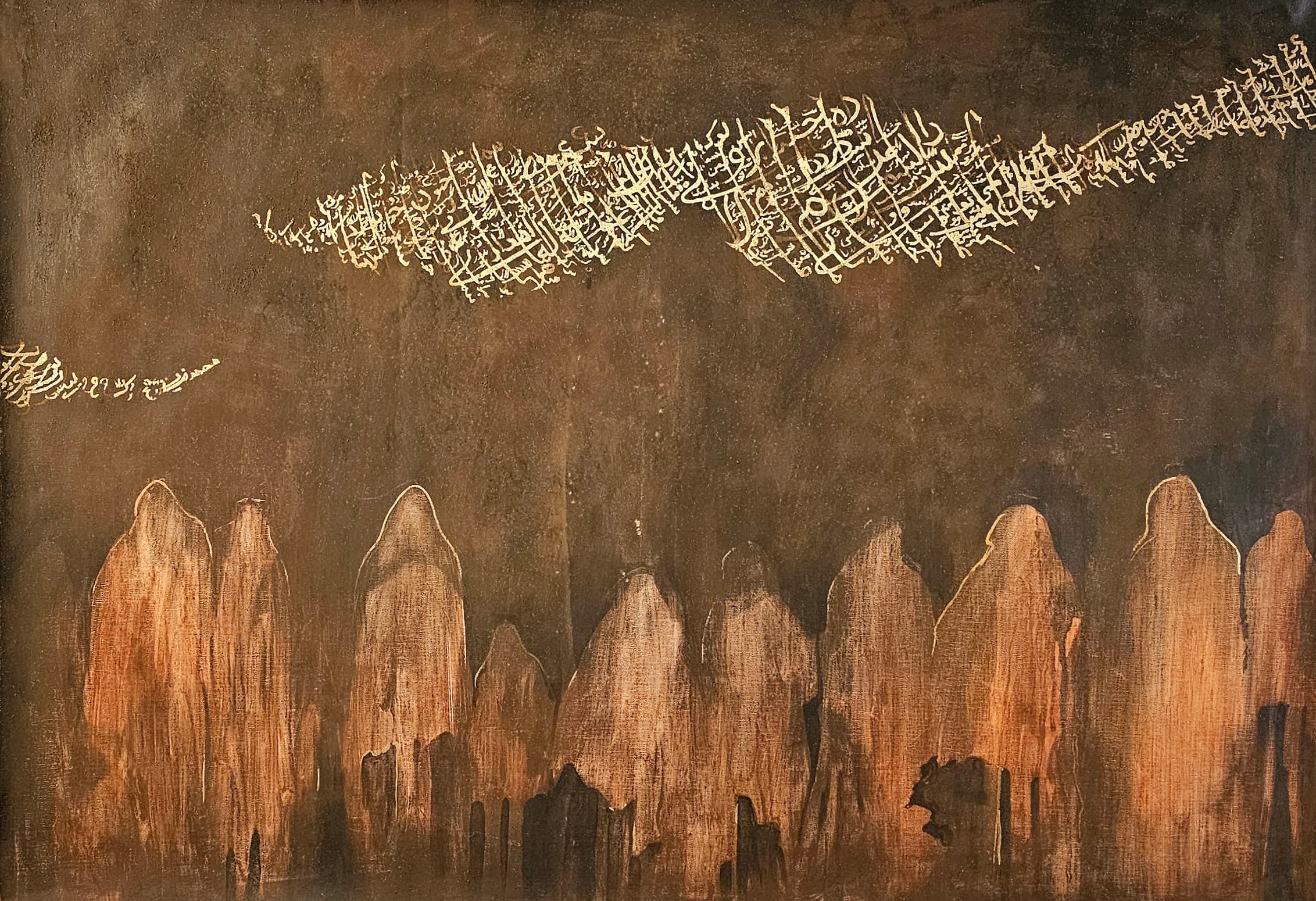
available
Women in the Dark
by Zia Forogh
MediumMixed Media on convas
Year2020
Dimensions80x100
Price$2,900
About this piece
In Afghanistan, religion has always played a dual role in women's lives. On one hand, authentic Islamic teachings emphasize dignity, justice, and human rights. On the other hand, rigid interpretations, tribal traditions, and patriarchal readings of religion have become tools for restriction, erasure, and violence against women. With the Taliban's return to power in 2021, the heavy shadow of imposed religion has spread over every aspect of women's lives: · Education: Girls are banned from secondary schools and universities. Extremist religiosity labels female education as "unholy" and "against Sharia." · Work and public presence: Women have been expelled from most government and private jobs. Going out without a male guardian, working in offices, even their voice and appearance are declared "contrary to religious law." · Dress and behavior: The burqa is mandatory. Restrictions on speaking, laughing, and even moving one's hands are enforced under the guise of "proper hijab." · Justice and violence: Taliban religious courts consider a woman's testimony worth half that of a man. Forced marriage and domestic violence are legalized or ignored based on distorted readings of religion. But what is called the "shadow of religion" is in fact the shadow of the ruling powers' interpretation of religion. Afghan women themselves know that the Qur'an defends them, that the Prophet Muhammad (peace be upon him) taught his daughters, and that Lady Khadija was a successful businesswoman. Yet, under the imposed darkness, hidden resistance continues: secret schools, silent protests, and hope for a tomorrow when the light of true religious understanding breaks through this darkness. Women in the Dark – not because of the essence of religion, but because of the use of religion in the darkest form of power.