← Back to Abstract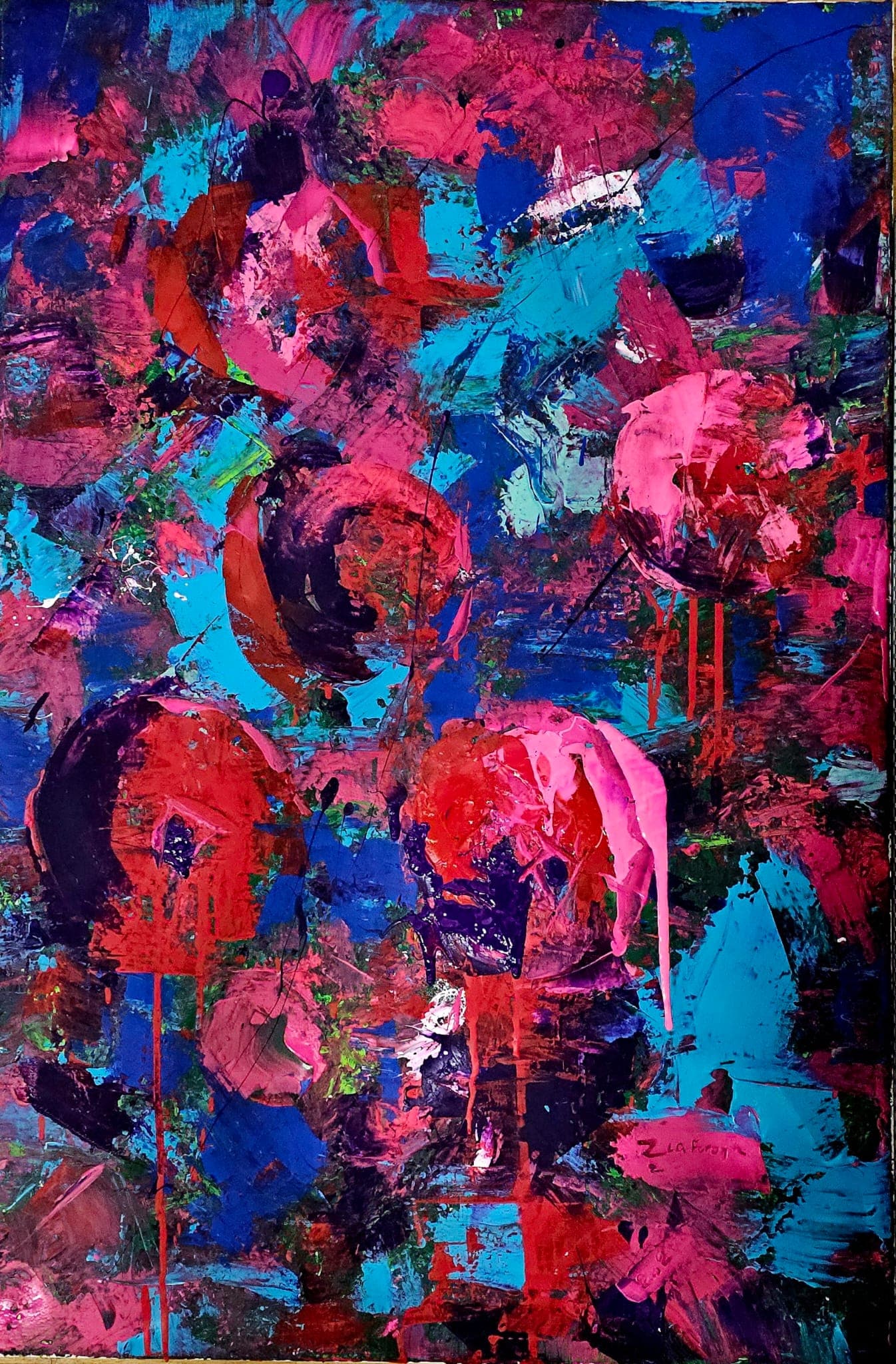
available
Pomegranates of Kandahar
by Zia Forogh
MediumAcrylic on canvas
Year2025
Dimensions60x88cm
Price$1,990
About this piece
Inspired by the poetry of Sharif Saeedi, this painting emerges from a history of genocide, displacement, and collective memory. It is rooted in the haunting verse: “In Kandahar, I was eating pomegranates when my mouth filled with the blood of my ancestors.” In this imagery, the sweetness of the pomegranate transforms into a symbol of historical pain, violence, and inherited trauma. The work reflects the suffering of the Hazara people in Kandahar — those who were massacred, and those who survived only to be forcibly displaced from their ancestral homeland. Behind these vibrant and courageous colors lies a hidden narrative born from genocide and exile. The glowing reds resemble both the flesh of pomegranates and the wounds carried through generations. What first appears beautiful and expressive slowly reveals a deeper testimony of loss, survival, and resistance. This painting is not only a visual composition, but also an act of remembrance. It preserves the voices and memories of people whose histories have too often been silenced, erased, or forgotten.